There is no single best sourdough baking vessel—there is only the best one for the kind of baker you are. Nordic Ware, which makes both a Dutch oven and a dedicated sourdough bread baker, puts it plainly: the real question is not which vessel is universally better, but what you want from your kitchen. If you want one pot for soups, stews, braises, roasts, and bread, a Dutch oven wins. If your main goal is easier, better bread, a specialized bread baker earns its place. And if you want bread-baking performance at a modest price with easier handling, the Lodge Combo Cooker sits in between.
One caveat before the comparison: this guide covers enclosed vessels for home ovens, not open baking on steels or stones, and it compares vessel types rather than every brand on the market.
Traditional Dutch Oven: The Versatile Workhorse
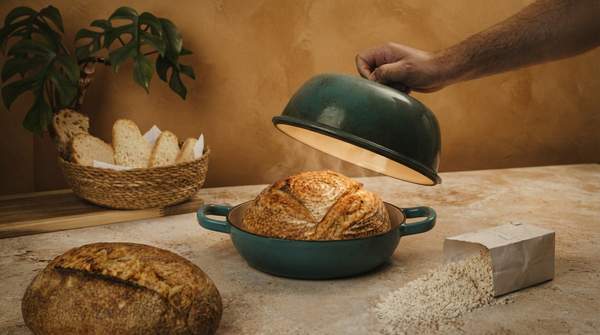
A cast iron Dutch oven is the default sourdough vessel for good reason. Cast iron retains heat well, and a tight lid traps the steam the dough releases, giving the crust time to develop before it sets. For crust and crumb, that steamy enclosed environment is what matters most.
But the Dutch oven's depth and weight are its weak points for bread. Nordic Ware describes the experience vividly: a cast iron Dutch oven can be heavy on a normal day, and once you add dough and preheat it to 500°F, "suddenly you're performing a tiny culinary obstacle course in your own kitchen." Lowering a slack, fermented dough into a deep, screaming-hot pot is the riskiest moment of the bake, and it demands caution and often practice.
The payoff is versatility. Nordic Ware's own guidance is that a Dutch oven is the right choice if you want to make soups, stews, braises, roasts, fried foods, and bread in the same pot—useful well beyond sourdough. If your kitchen storage is tight and you only have room for one heavy piece, that multi-purpose utility is a genuine advantage over any specialized tool.
Lodge Combo Cooker: The Baker's Favorite for Ease
The Combo Cooker solves the Dutch oven's biggest problem with one design change. It is a 3.2-quart seasoned cast iron set: a deeper pot with a shallow skillet that doubles as its lid. Lodge itself markets it as "the pan that sourdough bakers swear by," noting it is made in the USA from nontoxic cast iron produced without PFAS.
The design advantage is in the loading. Because the shallow skillet serves as the lid, you can invert the whole thing, place the skillet on the counter, and load your dough into a shallow, accessible pan rather than dropping it into a deep hot pot. Sourdough Archive, reviewing the set, credits this specific design feature with solving the biggest headache bakers face: the risk of burning yourself. The same review notes that while premium brands like Le Creuset and Staub get the aesthetic glory, this affordable cast iron set performs better for bread baking—though that is the reviewer's assessment, not a lab result.
At a listed sale price of $59.90 against a regular $69.95, it is also one of the least expensive quality options, and the skillet gives you a second usable pan. You still get full cast iron heat retention and steam trapping, so the baking physics match a traditional Dutch oven.
Specialized Bread Bakers: Precision for Perfect Loaves
Dedicated bread bakers, such as Nordic Ware's Simply Sourdough Bread Baker, trade versatility for a tool built around the loaf. Nordic Ware's comparison highlights the practical gains: a lighter bread baker is easier to lower into the oven, easier to remove, and easier to handle safely than a heavy cast iron pot preheated to 500°F.
Some designs also let you proof and bake in the same vessel, and Nordic Ware's model produces a rectangular loaf suited to sandwiches—a shape a round Dutch oven cannot give you. The company is candid about the trade: "It is more specialized, but that specialization is the point."
While the baking vessel is important, achieving excellent crust and crumb quality relies more on proper dough fermentation, shaping, proofing, and baking in a steamy environment than on whether the vessel is cast iron or aluminized steel. The vessel matters, but it is not a magic wand. A specialized baker buys you handling ease and loaf shape, not automatically better bread.
Sourdough Baking Vessel Comparison
The table below classifies the three vessel types across material, design, handling, and versatility, so you can see the core trade-off at a glance: multi-purpose utility versus specialized bread performance.
| Vessel Type | Material | Key Design Feature | Best For (Outcome) | Ease of Use/Handling | Versatility |
|---|---|---|---|---|---|
| Traditional Dutch Oven | Typically cast iron (materials vary); excellent heat retention | Deep lidded pot, often heavy | Good crust and crumb plus one pot for stews, roasts, and more | Challenging: loading dough into a hot, deep pot carries burn risk | Highly versatile, useful well beyond bread |
| Lodge Combo Cooker | Seasoned cast iron, made without PFAS | Shallow skillet doubles as the lid for a deeper pot | Strong bread results with easier loading and reduced burn risk | Easier: inverted-lid design lets you load a shallow pan | Moderate: Dutch oven, skillet, and lid in one, but bread-focused |
| Specialized Bread Baker (e.g., Nordic Ware) | Lighter than cast iron (e.g., aluminized steel) | Bread-specific shape; some allow proofing and baking in one vessel; rectangular loaf option | Easier, more consistent bread baking; sandwich-shaped loaves | Easiest: lighter to lift in and out of a hot oven | Low: specialized for bread by design |
Read across the rows and the pattern is clear: as specialization increases, handling gets easier and loaf shape gets more tailored, but versatility for other cooking drops away. No row wins every column—which is exactly why the choice depends on your kitchen, not on the hardware.
Choosing Your Ideal Vessel: A Decision Framework
Work through these questions in order; each one points toward a different vessel type based on the trade-offs above.
- Do you cook one-pot meals regularly, or is bread the main event? If you want soups, stews, braises, and roasts from the same pot, choose a traditional Dutch oven—Nordic Ware's guidance is explicit that its value lies in multi-purpose use. If bread is the priority, move to question two.
- How much does safe, easy handling matter to you? If you bake frequently and dread lowering dough into a deep 500°F pot, the Combo Cooker's inverted-lid loading or a lightweight bread baker removes the riskiest step. If you're comfortable with hot cast iron, a standard Dutch oven is fine.
- What loaf shape do you want? Round boules suit all three. If you prefer a rectangular sandwich loaf, a specialized bread baker like Nordic Ware's is the option that delivers it.
- What is your budget, and how much storage do you have? The Combo Cooker's listed price of $59.90 on sale ($69.95 regular) makes it the value pick, and Sourdough Archive notes solid bread-baking vessels generally range from about $50 to $400. A specialized baker costs you a dedicated shelf for a single-purpose tool; a Dutch oven replaces cookware you might buy anyway.
One honest note to keep the choice in perspective: as Nordic Ware itself acknowledges, the vessel is not a magic wand. Fermentation, shaping, proofing, and steam matter more to crust and crumb than cast iron versus aluminized steel. Choose the vessel that makes your process safer and more pleasant, then put your energy into the dough.
Making Your Choice: A Baker's Decision Guide
Select a sourdough baking vessel based on your primary baking goals, frequency, desired loaf shape, and handling preferences, weighing versatility against specialized performance. The multi-purpose cook should reach for a Dutch oven; the frequent baker who values safe, easy loading gets the most from a Combo Cooker; and the dedicated sandwich-loaf baker benefits from a specialized bread baker.
Here is how to know you chose well: the baker consistently achieves desired crust and crumb results with their chosen vessel, and finds the baking process efficient and enjoyable. If after several bakes loading still feels risky or the loaf shape still fights your goals, that is your measurable signal to switch vessel types—your dough technique, not your pot, will tell you the difference.
Sources
- Nordicware
- 3.2 Quart Seasoned Cast Iron Combo Cooker — Lodge Cast Iron
- Lodge Combo Cooker vs Dutch Oven: Which is Best — Sourdough Archive