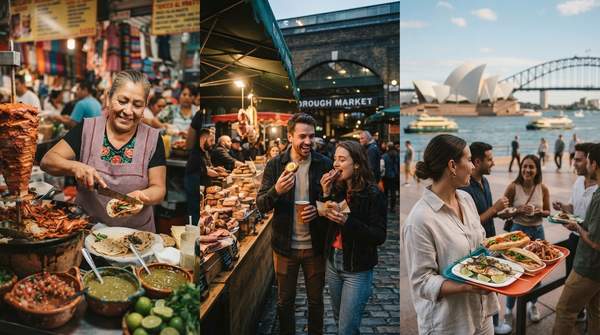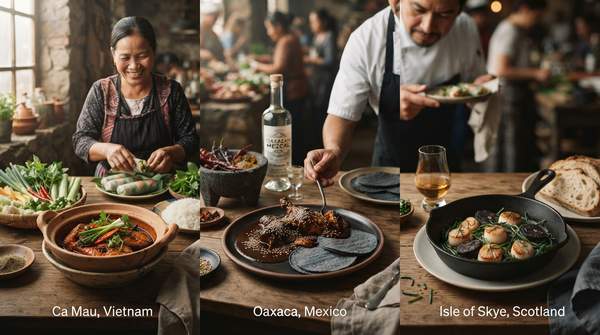
If you're plotting a food-centric journey and want somewhere before the crowds arrive, three very different places are earning attention right now: Ca Mau, Vietnam's southernmost province, where the local shrimp festival is being built into a full cultural showcase; Oaxaca, Mexico, where mole, markets, and artisanal mezcal trails anchor one of the world's most talked-about gastronomic regions; and the Isle of Skye in Scotland, where a close-knit community of chefs has turned a windswept island into what Eater's 2026 "Where to Eat Around the World" guide calls a Scottish culinary epicenter. Each offers a distinct style of immersion—festival-driven in Vietnam, heritage-driven in Mexico, and landscape-driven in Scotland. Here's how they compare, and how to think about which one fits the trip you actually want.
Ca Mau, Vietnam: A Shrimp-Centric Cultural Journey
What makes Ca Mau compelling isn't just the food itself but the story the province is deliberately attaching to it. In an interview published by Báo Cà Mau, Nguyen Quoc Thanh of the provincial Department of Culture, Sports and Tourism described a culture "formed from the long-standing connection between people and the rivers, mangrove forests, and the sea," and shaped by the "coexistence and cultural exchange of the three brotherly ethnic groups: Kinh, Khmer, and Hoa." Those values, he explained, run through art, customs, occupations, and "especially culinary culture."
The shrimp is the anchor. Ca Mau's festival programming—anchored by an opening art program themed "Illuminating Cultural Identity – Ca Mau Shrimp Reaching the World"—pairs the region's signature shellfish with a broad cultural immersion: a recreated space for the daily life, culture, and cuisine of the Kinh, Khmer, and Hoa communities; a traditional music and singing festival; performances of Khmer five-tone music; a lion dance festival; and a cultural night of the province's ethnic groups. OCOP (One Commune One Product) stalls and local specialty stalls extend the experience from tasting to learning about, and bringing home, regional products.
The ambition, as Thanh framed it, is to make culinary culture itself a distinctive tourism product: "When a delicious dish is linked to a story about the forest, the sea, the shrimp farmers, and the way of life of the people of Ca Mau, it not only appeals to the taste buds but also contributes to promoting the image of the destination." If you want your eating wrapped in festival energy, performance, and a clearly narrated sense of place, this is the strongest of the three.