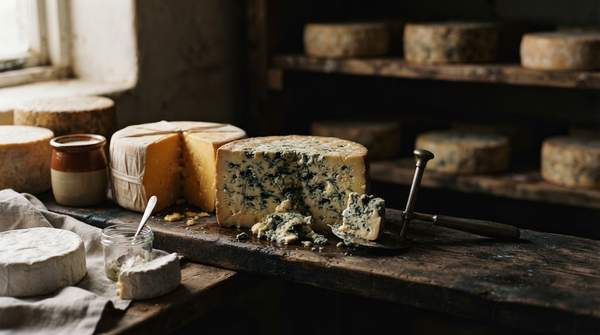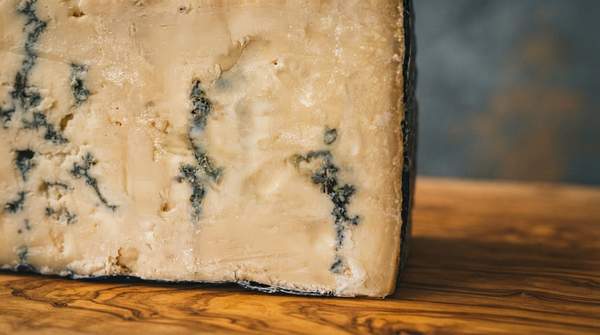
The holes in Swiss cheese, the blue-green marbling of a Roquefort, and the rust-orange rind and penetrating smell of a washed-rind wheel are not accidents of terroir or mystique. Each is the visible signature of a specific, named microorganism at work. A scientific review of the cheese ecosystem published in the journal Microorganisms traces these characteristics directly to individual species: Propionibacterium freudenreichii for the eyes and flavor of Swiss-type cheeses, Penicillium roqueforti for the veins and pungency of blue cheeses, and Brevibacterium linens for the color and aroma of smear-ripened varieties. Understanding those names, and what each one actually does, turns tasting from passive enjoyment into recognition.
Starter vs. Secondary Cultures: Different Roles, Distinct Outcomes
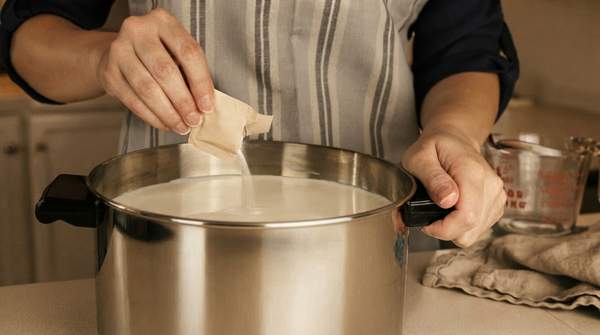
Cheesemaking is a relay race between two very different microbial teams, and confusing them is the most common misunderstanding in cheese appreciation. The first leg belongs to the primary, or starter, cultures: lactic acid bacteria such as Lactococcus lactis subspecies lactis and cremoris, used in most cheeses, and the pairing of Streptococcus thermophilus with Lactobacillus delbrueckii subspecies lactis in Italian and Swiss types. Their job is fundamentally structural: they convert milk sugar into lactic acid, acidifying the milk, firming the curd, and setting the stage for everything that follows. Flavor development begins here too, but acidification is their defining contribution.
The second leg belongs to secondary, adjunct, or ripening cultures, and this is where a cheese's identity is written. These microbes arrive on the scene after acidification has done its work, often on the surface or deep within the paste during the ripening months. Propionibacterium freudenreichii in Swiss-type cheeses, Brevibacterium linens and Corynebacterium casei in smear-ripened wheels, Penicillium camemberti on white moldy cheeses, and Penicillium roqueforti in blue-veined varieties all play this role, according to the microbial survey compiled from research by Fox and colleagues and by Parente and Cogan.
The distinction matters because the two teams respond to different conditions and produce different results. Acidification is fast and largely a matter of days; ripening is slow, unfolding over weeks or months at low temperatures and high humidity. The review emphasizes that the environment, from whether starters were used at all to ambient conditions in the aging room, modulates which microbes implant and how active they become. Those variables, not just the ingredient list, determine the "unique appearance, texture, aroma and taste properties of each cheese variety."