Here's the rule that will change how you cook: cuts high in connective tissue must be cooked low and slow with moisture to become tender, while cuts low in connective tissue should be cooked hot and fast to stay juicy. That single principle explains why a brisket needs hours in a braise while a tenderloin needs minutes in a hot pan. The amount of connective tissue, primarily the protein collagen, is set by anatomy: muscles the animal works hard, like shoulder and leg, are loaded with it; lazy muscles along the back have very little. Once you can read a cut that way, you never need to memorize a recipe pairing again.
The Science of Tenderness: Why Your Cooking Method Matters
Most kitchen disappointment traces back to a mismatch: fast heat applied to a collagen-heavy cut, or slow heat wasted on an already-tender one. As the team at The Culinary Pro puts it, animal proteins are mostly water, so cooking time and temperature directly determine the outcome—cook them too much or too long and "they become tough and dry, plus their yield will be significantly diminished."
The fix isn't better technique; it's matching the method to the structure. Cuts that are naturally tender, like a tenderloin steak or a chicken breast, should be cooked minimally to retain moisture, while cuts from the shoulder, breast, and belly of beef and pork need extended cooking to become tender at all. Meathead Goldwyn's meat-science guide for cooks makes the same point bluntly: different cuts vary significantly in tenderness, fat, and collagen, so some are best cooked hot and fast, others low and slow, and a few need a combination to reach their best texture.
Meat's Building Blocks: Muscle Fibers, Connective Tissue, and Fat
Every cut you buy is built from the same three materials, just in different proportions. A scientific review of muscle structure notes that skeletal muscle consists of roughly 90% muscle fibers and about 10% connective and fat tissue. Those fibers are the contractile machinery—the part that squeezes and toughens when overcooked.
Muscle fibers are bound together in bundles called fascicles, held by connective tissue in the form of collagen, as The Culinary Pro explains. Collagen is tough stuff, and how much of it a cut carries determines how chewy it starts out. Fat is the third player: marbling—fat distributed within the muscle—adds flavor and juiciness and contributes to perceived tenderness by lubricating the muscle fibers. But fat doesn't break down tough collagen itself; its job is to make the eating experience richer, not to do the structural work. That's why marbling matters most within the tender cuts, and why a well-marbled but collagen-heavy chuck still demands slow cooking.
Collagen: The Key to Unlocking Tenderness
Collagen is where the magic happens. As Modernist Cuisine explains, when meat cooks, particularly in the presence of moisture and time, "collagen unwinds and breaks apart into gelatin, making the meat softer and more succulent." That transformation is the whole principle behind slow braising and pressure cooking: you're tenderizing by converting connective tissue into something luscious and rich.
But collagen demands respect, especially in older animals, because breaking it down takes both heat and time. Modernist Cuisine warns that cooked too fast or too hot, collagen shrinks forcefully, squeezing out moisture and leaving meat dry and chewy. Cooked low and slow, you get a dramatic textural shift instead. This is the central trade-off in all meat cookery: high heat destroys moisture before collagen can convert, while low heat with enough time gives the conversion room to happen.
Your Meat Cooking Decision Framework
Here is the practical tool. Cuts fall into two categories based on anatomical origin—hard-working muscles versus less-used ones—and each category maps to one cooking strategy. Use the matrix below to classify any cut of beef, pork, lamb, or poultry before you cook it.
| Path | Cut characteristic | Typical examples | Optimal method and why |
|---|---|---|---|
| Slow & moist | High connective tissue; from hard-working muscles (shoulder, leg, breast, belly) | Beef chuck and brisket, shank, pork shoulder (Boston butt and picnic), lamb breast | Braising, stewing, slow roasting or slow cooker: moist heat over time converts collagen to gelatin, yielding tender, succulent meat |
| Fast & dry | Low connective tissue; from less-used muscles (back and loin) | Tenderloin, sirloin, pork loin, lamb rib chops, chicken breast | Grilling, searing, pan-frying: quick, precise heat preserves moisture and prevents muscle fibers from toughening |
To use it, ask one question: where on the animal did this cut come from? A muscle that worked hard—walking, standing, supporting weight—earned extra collagen and belongs on Path 1. A muscle that cruised along the back belongs on Path 2. This covers red meats and poultry; it's not designed for fish, which have a fundamentally different muscle structure. It's a framework for choosing methods, not a recipe book with timings—and it doesn't cover pre-cooking steps like aging or brining.
Path 1: Slow & Moist Heat for Tough, Flavorful Cuts
The hard-working cuts reward patience. Pork shoulder, sitting on the upper front leg, is marbled with fat and connective tissue and rich in flavor, which is why University Meat's butcher guide calls it ideal for low-and-slow recipes where fat renders into juicy, tender meat—slow roasting, pulled pork, sausages. Lamb breast, similarly economical, contains a good amount of fat and connective tissue, and per Acabonac Farms it's best for braising or slow roasting, which tenderize it and deepen its flavor.
The method matters as much as the time. Texas Tech's meat science cookery materials teach that braising, stewing, and slow-cooker methods are moist-heat cookery, and they note a practical consequence: because moist heat cookery mutes surface browning, you must add flavoring agents to make the food taste its best. Aromatics, wine, and stock aren't optional garnish on this path—they're how flavor gets built. Doneness is judged by feel, too: braised and stewed cuts are done when a fork slides in easily and the meat slides off, not by a thermometer target.
Path 2: Fast & Dry Heat for Tender, Lean Cuts
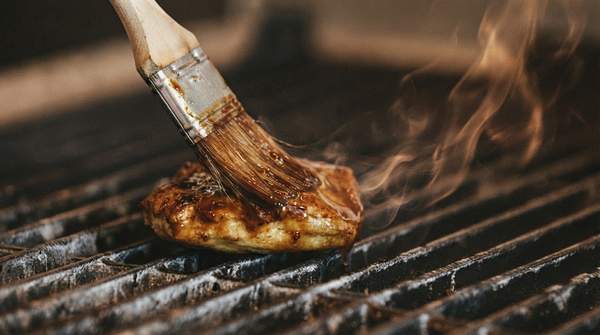
The naturally tender cuts ask the opposite of you: get in and out fast. The pork loin runs along the back between shoulder and leg, is lean and tender, and—as the University Meat chart warns—should not be overcooked if you want to retain moisture. Lamb rib chops from the rack are prized for their juiciness and fine texture and are best cooked quickly by grilling or pan-searing.
Speed is the whole point. These cuts have little collagen to convert, so there's nothing to gain from time in a braise—and everything to lose, since extended cooking just drives out water and toughens the fibers. Texas Tech's cookery guide stresses knowing which method fits every beef, pork, and lamb retail cut before you start; on this path, that means high, direct, dry heat and a thermometer or touch test rather than a clock. The Culinary Pro recommends testing small tender cuts by touch pressure, cooking them only from rare to well-done as you prefer.
Cook Smarter: Applying the Connective Tissue Rule
Assess a meat cut's likely connective tissue content based on its origin—active muscle or inactive muscle—to determine the optimal cooking method. Anatomically, that means reading the carcass before reading a recipe: leg, shoulder, breast, and belly signal collagen and the slow path; back, loin, and rib signal tenderness and the fast path.
Modernist Cuisine sums up the reward for thinking this way: choose cuts based on use, tough ones for long slow cooking and tender ones for quick precise heat, use temperature wisely—too hot and you lose moisture, too cool and collagen won't break down. The measurable indicator that you got it right is on the plate: the meat becomes tender and flavorful, not tough or dry. When a braise turns gelatinous and spoon-soft, or a seared chop comes out juicy, you'll know you read the anatomy correctly. That's real butchery literacy—choosing the path before the pan.
Sources
- The Science of Cooking Proteins — The Culinary Pro
- Basic Meat Science For Cooks — Meathead's AmazingRibs.com
- How Muscle Structure and Composition Influence Meat and Flesh Quality - PMC
- Understanding Meat - Modernist Cuisine
- University Meat | Meat Cut Comparison Chart: A Butcher’s Guide to Understanding Beef, Lamb, Pork and Chicken Cuts — Universitymeat
- Top 10 Lamb Cuts Explained — Acabonac Farms
- DEPTS