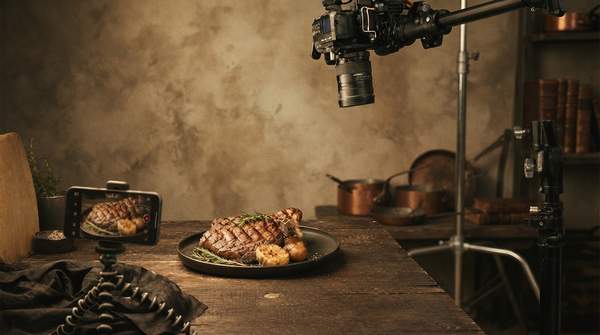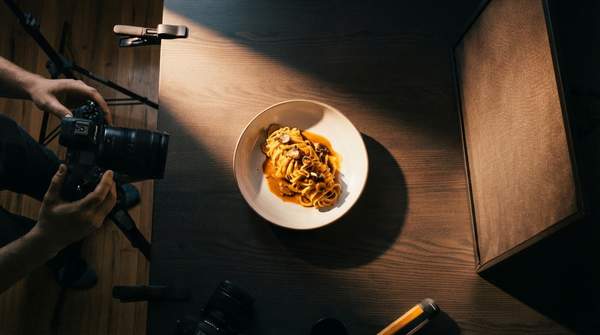
Good food photography is not about owning expensive gear; it is about controlling two properties of light: where it comes from and how soft or hard it is. Side lighting builds gentle shadows that define texture — crispy edges, flaky pastry, glossy sauces — while backlighting produces a dramatic glow, especially around transparent foods and drinks. Soft, diffused light gives a bright, airy feel; direct, unmodified light looks bold and dramatic. This guide maps those principles to repeatable setups using natural light, entry-level LEDs, and two simple modifiers: a diffuser and a reflector. It covers still photography only, not video, and skips camera settings and gear recommendations.
Natural Light vs. Artificial Light: Pros and Cons
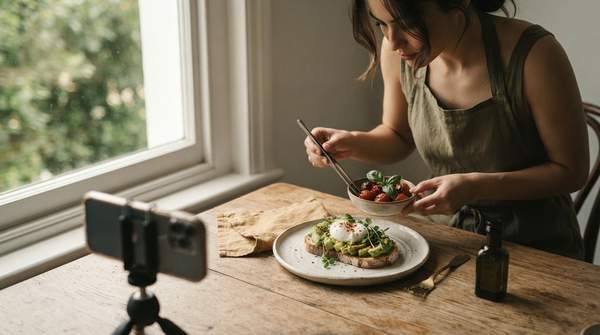
Natural window light is widely regarded as the most flattering source for food photography, and many professionals prefer it whenever possible because nothing quite matches the quality of diffused daylight, as the photography writer Ali Tanis notes. It is also completely free — the Institute of Culinary Education (ICE) recommends simply finding windows and doors that can act as your main source and taking a few test shots to see how the light behaves.
The trade-off is consistency. ICE cautions that seasons and time of day change the quality of natural light, and photographer Skyler of We Eat Together describes the frustration plainly: the sun is not always available at your beck and call. Direct sunlight can also be harsh, making subjects look overexposed and washed out, according to ICE's Anthony Leo. To soften it, ICE suggests moving the subject slightly back from the window, shooting on a cloudy or rainy day, or filtering the light through a curtain.
Artificial light solves the reliability problem. A lighting equipment guide from Colbor notes that artificial lighting offers greater flexibility, a refined appearance, and precise control regardless of time or weather. ICE recommends pairing a flash or LED with a diffuser, such as an umbrella or softbox, so the light does not hit the food too harshly. The catch is skill: natural-looking artificial light requires practice. Skyler observes that there are qualities to natural lighting that are hard to describe, though when the two are seen side by side, most people can simply tell them apart. The "gold standard" softness of daylight can be emulated with artificial setups, but it takes deliberate diffusion.