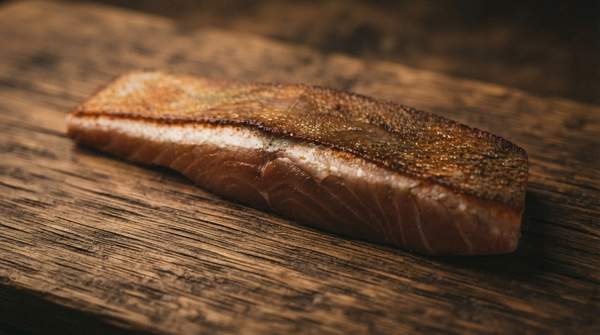
Dry-aging fish is a fundamentally different undertaking from dry-aging beef, and the reason is biochemical: fish muscle carries more water activity and far more polyunsaturated fatty acids than red meat, which makes it oxidize and spoil faster and leaves far less room for error. A peer-reviewed study on aging grouper fillets states this plainly: compared to red meat, fish muscle is more susceptible to oxidation, and its lipid oxidation and microbial spoilage rates are rapid, making fish "highly sensitive to aging conditions." Beef, by contrast, is aged for one to five weeks precisely because its slower biochemistry tolerates—and rewards—that timeline. Understanding these differences is the key to adapting aging intelligently rather than transposing beef practice onto fish.
The Fundamental Science of Dry-Aging: Beef vs. Fish
Dry-aging, at its core, is controlled time. Beef carcasses, primals, and subprimals are stored without protective packaging at refrigeration temperatures for one to five weeks, according to guidance from the beef research community, so that natural enzymatic and biochemical processes can improve tenderness and develop the distinctive flavor known as "dry-aged beef." The same source concedes that dry aging beef "may be more art than science"—a well-established craft refined over decades of industry practice.
Fish aging lacks that long runway. The grouper study, published in the scientific literature on aquatic meat products, notes that while aging has been extensively studied in red meats such as beef and pork, its application to fish "remains underexplored." That asymmetry matters for anyone hoping to transfer technique: the processes that take weeks in beef unfold—and can go wrong—far more quickly in fish, because the underlying substrate differs from the very first day.
Enzymatic Action and Tenderization: A Divergent Path
In beef, enzymatic tenderization is a central goal. The natural enzymes at work over those weeks of refrigerated storage break down muscle structure, and the resulting tenderness is a primary reason the process exists at all. It is a slow remodeling of a firm tissue.
In fish, the enzymatic story is inverted. As explained by the Japanese Food Lab, a culinary-science resource on fish aging, the proteases naturally present in fish cells act on the flesh itself, breaking the bonds between amino acids in protein chains. The proteins fragment into smaller segments and then into their constituent amino acids—and those fragments of varying lengths register as different tastes and smells on our receptors, giving the fish a more complex flavor. Fish muscle already has a softer texture than beef, so the payoff of aging fish is flavor complexity and umami rather than the dramatic tenderization beef aging delivers. The enzymes work faster and on a more delicate substrate, which means the same activity that builds flavor can, past its peak, simply degrade the flesh.
Moisture Loss and Flavor Concentration: Beyond Simple Dehydration
Unwrapped storage means moisture leaves the protein, and that loss concentrates flavor compounds in what remains. In beef, weeks of evaporation are part of the calculus: weight is lost, but the flavor that survives is denser and more distinctive.
Here the water content difference between the two proteins shapes everything. The grouper study establishes that fish muscle has higher water activity than red meat—the same property that supports microbial growth also means fish behaves differently as it dries. Higher water activity keeps the muscle environment more hospitable to the very microbes a dry-ager is trying to hold at bay, and it changes how quickly the surface and interior respond to the aging environment. Dehydration that concentrates beef flavor over weeks cannot be assumed to do the same for a fish whose chemistry is already trending toward spoilage at a much earlier point.
Fat Composition and Oxidation: The Flavor and Spoilage Divide
This is where the two proteins truly part ways. According to the comparative study, fish muscle contains a higher content of polyunsaturated fatty acids—PUFAs—than red meat, and PUFAs are more susceptible to lipid oxidation. That susceptibility is both a promise and a threat.
The promise: oxidative and enzymatic breakdown generates new flavor compounds, contributing to the complexity that makes aged fish interesting. The threat: oxidation pushed too far produces rancidity, and because fish lipids oxidize readily, the window between "developed" and "off" is narrow. Beef's fat profile, by relative contrast, sits lower in polyunsaturates, so its flavor develops over the long timeline of weeks without tipping into rancidity nearly so easily. This single difference in fat chemistry explains why the same calendar that benefits beef can ruin fish.
Heightened Risks: Microbial Spoilage in Fish Aging
The grouper research is direct about the stakes: lipid oxidation and microbial spoilage rates are rapid in fish, and the higher water activity of fish muscle compounds the microbial problem. Where beef aging is an established industrial and artisanal practice, fish aging demands vigilance from the outset because the failure modes arrive quickly and on multiple fronts simultaneously.
The study's framing carries a practical warning for anyone considering raw consumption of aged fish: the sensitivity to aging conditions implies professional-grade food safety control. This article explains the science; it is not a step-by-step guide, a substitute for food safety training, or a recipe, and the general principles discussed here may not apply to every fish species.
Comparative Framework: Dry-Aging Beef vs. Fish
The table below juxtaposes the documented properties of each protein to show why their aging conditions and outcomes cannot be interchangeable.
| Dimension | Beef | Fish |
|---|---|---|
| Water activity | Lower relative to fish (inferred from fish having "higher water activity") | Higher in fish muscle, contributing to greater microbial spoilage risk |
| Fat composition | Lower polyunsaturated fatty acid content relative to fish | Higher PUFA content, more susceptible to lipid oxidation |
| Enzymatic action | Natural enzymatic and biochemical processes improve tenderness over one to five weeks | Higher protease activity breaks proteins into amino acids, building flavor complexity and umami |
| Flavor development | Slow development of the unique "dry-aged beef" flavor over weeks | Rapid development of complex taste and smell from varied protein fragments |
| Primary spoilage risk | Well-established process; spoilage manageable under standard aging practice | Rapid lipid oxidation and microbial spoilage; highly sensitive to aging conditions |
| Practical implication | Weeks-long timeline tolerated and rewarded | Shorter, more controlled timeline; professional-grade controls for raw consumption |
Read together, these rows tell one story: every property that makes fish aging fast and flavorful—water activity, PUFAs, protease activity—also makes it fragile. Beef's biochemistry buys time; fish's spends it.
Adapting Dry-Aging for Diverse Proteins: A Scientific Imperative
Culinary professionals and discerning home cooks must adapt dry-aging parameters based on the distinct biochemical properties of the protein, particularly when transitioning from beef to fish. Treating the two as interchangeable ignores the documented differences in water activity, fat oxidation, and spoilage rate that define each process.
Successful dry-aging of fish will be indicated by enhanced umami flavor and desirable texture without signs of off-odors, discoloration, or sliminess, requiring strict adherence to controlled temperature and duration. Those sensory markers are the practical test of whether the science was respected: flavor complexity achieved before oxidation and spoilage overtake the flesh is the whole of the craft.