During a recent May Day holiday, Zibo, China, unveiled a secret. Its local barbecue, a symphony of smoke and spice, ignited an extraordinary economic surge. Accommodation bookings soared by 800%, travel orders by over 2000% compared to 2019. The city, once a quiet corner, pulsed with new life, drawing eager travelers from across the nation, all seeking that one authentic, unforgettable flavor.
Many destinations cast a wide net, hoping to capture tourists with a medley of attractions. Yet, the most profound economic transformations now spring from a single, deeply authentic culinary offering. A compelling shift in the traveler's heart, away from the general and towards the truly unique, is evident.
Thus, destinations that courageously invest in and champion their distinct food culture stand poised for swift, substantial returns. They can redefine their tourism landscape, not through diluted variety, but through the magnetic power of focused authenticity.
Quantifying the Culinary Impact
The economic ripples of culinary appeal are undeniable, though their scale varies. In Thailand, for instance, gastronomic tourism was projected to contribute a modest 1% to 2% to the nation's GDP during the COVID-19 pandemic, according to pmc. The contribution, while significant, stems from a broad approach to food-related travel. Researchers, employing advanced Dynamic Input-Output (I-O) and Bayesian Structural Time Series (BSTS) models, confirm that even this wider culinary embrace provides a measurable national economic boost, even through challenging times. Yet, Zibo's story offers a stark counterpoint. Its single, specific barbecue ignited an 800% surge in accommodation bookings and a 2000% leap in travel orders. A dramatic contrast suggests that a laser focus on a niche, authentic culinary gem can unlock not just growth, but exponential economic transformation, far surpassing the returns of a generalized gastronomic strategy.
The Psychology of a Satisfied Palate
| Experience Component | Impact on Tourist Satisfaction | Impact on Subjective Well-being |
|---|---|---|
| Food Sensory Experience | Positive | Positive |
| Service Experience | Positive | Positive |
| Environmental Experience | Positive | Positive |

Footnote: Data derived from the effect of food tourism experiences on tourists' subjective well-being, according to pmc.
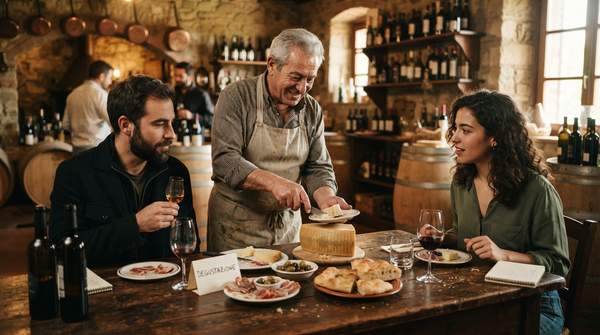
Beyond numbers, the true magic of culinary tourism lies in the heart's satisfaction. Research confirms that a tourist's food sensory experience, the service received, and the surrounding environment all weave together, profoundly shaping their satisfaction and subjective well-being, according to pmc. It's not merely the taste; it's the entire tapestry. How a traveler perceives this holistic experience — their attitude — acts as a vital bridge, mediating their enjoyment and ultimately influencing their deeper sense of well-being. This intricate psychological dance means that a truly memorable meal transcends mere sustenance; it becomes a cherished memory, a story carried home, fostering not just repeat visits but becoming a whispered recommendation, a call to fellow adventurers. The flavors linger, but the feeling, the connection to a place through its food, truly endures, embedding itself in the traveler's personal narrative.
Championing Culinary Heritage
The journey towards culinary distinction is often paved by those who champion heritage. The American Indigenous Tourism Association (AIT) stands as a beacon, actively seeking nominations for its Excellence in Indigenous Tourism Awards, according to Native News Online. The initiative speaks volumes: it recognizes the profound economic power nestled within culturally rooted experiences. Beyond accolades, AIT invests in the future, offering a Tourism & Hospitality Scholarship to U.S. Indigenous students, nurturing the next generation of stewards for these invaluable traditions. Such dedicated programs and awards are not mere gestures; they are vital catalysts. They cultivate and celebrate authentic cultural and culinary experiences, drawing travelers who yearn for genuine connection, echoing the triumphs of destinations that embrace their unique local flavors. The upcoming 2026 Excellence in Indigenous Tourism Awards Gala, set for October 21, 2026, in Tulalip, Washington, according to Native News Online, further solidifies this commitment. A sustained spotlight on authenticity creates a powerful current, guiding destinations to weave their unique foodways into the very fabric of their tourism identity. It signals a long-term vision, where cultural culinary recognition is not a fleeting trend but a foundational pillar of economic growth. For destinations and businesses, the call to action is clear: the submission deadline for these prestigious awards is Friday, July 17, 2026. Engaging with such platforms is more than participation; it's an affirmation of identity, a strategic step towards amplifying a unique culinary voice, and a direct path to attracting the growing tide of visitors who seek the soul of a place through its food.
If destinations continue to embrace and elevate their singular culinary narratives with such dedication, the future of travel appears likely to be defined by the unforgettable taste of authenticity.