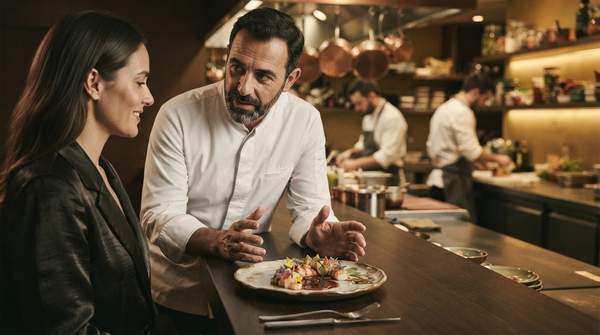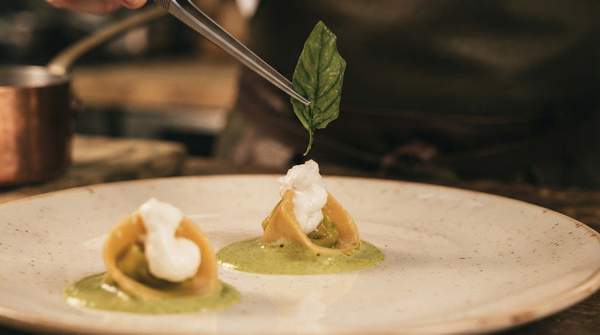
The next time you sit down in a fine-dining restaurant, the seamless service you enjoy is the descendant of a 19th-century military idea. The Maître d'hôtel and the Chef de Rang both emerged from the rigid, command-chain hierarchy that Auguste Escoffier brought to French restaurants — but their duties have shifted considerably since. The Maître d'hôtel has moved from a hands-on headwaiter who boned fish at the table to a supervisory manager of the overall guest experience, while the Chef de Rang has remained the enduring core of section service and a defined stepping stone toward leadership.
The Origins of Restaurant Service: Escoffier's Brigade System
At the end of the 19th century, Auguste Escoffier — often called the father of French cuisine — imposed order on the chaos of the professional kitchen by subdividing roles with surgical precision: a cook for sauces, one for fish, one for the grill, each with a clear line of command. This structure, the brigade de cuisine, is widely said to have been inspired by the military command systems Escoffier observed in his youth. The design principle was simple: eliminate ambiguity about who reports to whom and who makes the final call, so the organization moves as one even under pressure.
Crucially, that logic did not stay in the kitchen. As Manabu Kato, a writer on French service culture living in Provence, recounts, the same hierarchical thinking was extended to the salle — the dining room — where the challenge was delivering each finished dish to the guest quietly, precisely, and without a wasted movement. In a traditional French fine restaurant, Kato observes, there is an extremely strict role structure dictating what is done, by whom, and in what order, so that no two servers ever duplicate a motion — like a stage play in which every actor knows their cue. The front-of-house brigade, with the Maître d'hôtel at its head and the Chef de Rang commanding a section, was born from that design.