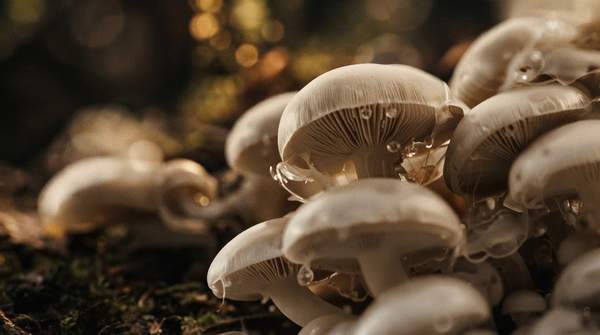
Most cooks know fungi only by their fruiting bodies — the mushrooms we slice into pans. But the mushroom is just the visible reproductive structure of a much larger organism. The real culinary frontier lies in two other forms: mycelium, the fibrous white network of filaments that fungi grow through their food, and fermented fungal products such as tempeh, in which that mycelium binds a substrate like soybeans into a firm, sliceable cake. Recent food science suggests these forms offer textures and flavors that mushrooms alone cannot deliver, from naturally fibrous meat-like patties to bioengineered mycelium with heme-driven meatiness.
Beyond the Cap: Understanding Edible Fungi Forms
Edible fungi reach the kitchen in three distinct forms, and confusing them is the first mistake a plant-based cook makes. The first is the familiar fruiting body — the mushroom itself, produced by many species, including commercially cultivated basidiomycetes. The second is mycelium biomass: the fungus's vegetative body, a network of fine white filaments that can be grown on food-grade substrates and harvested directly. The third is the fermented product, where living mycelium is put to work on a substrate — the classic example being tempeh, an Indonesian food in which the mycelium of Rhizopus fungi binds whole soybeans into a dense cake during controlled fermentation.
The distinction matters because each form behaves differently in the kitchen. A review of mushroom mycelia as alternative proteins notes that fast-growing species with good texture and flavor, such as Pleurotus (oyster mushroom) mycelium, are being promoted for commercialization precisely because their morphology and structure can be shaped by culture conditions. Mycelium is also easier to cultivate than the macrofungi that produce mushrooms, which require the long, finicky process of fruiting. In other words, the mushroom is the hard part; the mycelium is the accessible part.