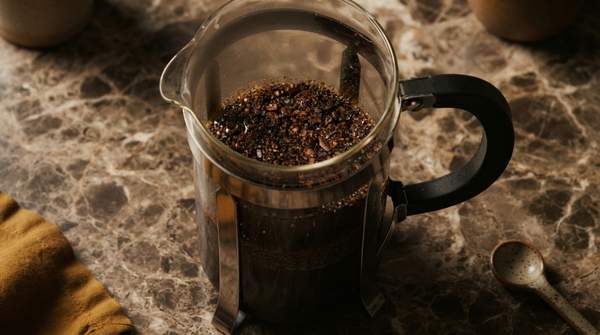
The French press is a beloved brewing method known for producing coffee with a bold flavor and full body. Achieving your ideal cup involves understanding and adjusting key variables: grind size, water temperature, and steep time. By manipulating these elements, you can control the extraction process, enhance specific flavor notes, and troubleshoot common brewing issues.
The French press operates on a simple immersion principle, where coffee grounds steep directly in hot water before a filter is pressed down to separate the brewed coffee. This method allows for significant control over the final taste, making it a favorite for those who enjoy experimenting with their brew, according to the National Coffee Association (NCA).
Understanding French Press Extraction: The Role of Variables
Coffee extraction is the process by which water dissolves soluble compounds from coffee grounds, creating the flavor in your cup. Grind size, water temperature, and steep time are the primary variables that influence this process. Each plays a crucial role in how quickly and thoroughly these compounds—such as acids and sugars—are dissolved, ultimately shaping the coffee's taste, strength, and body, as explained by Ratio Coffee.
For instance, a finer grind exposes more surface area to water, leading to faster extraction. Conversely, colder water or shorter steep times can result in under-extraction, while hotter water or longer steep times risk over-extraction. The goal is to find a balance that extracts desirable flavors without introducing bitterness or sourness.
Mastering Grind Size for Optimal Flavor
For French press brewing, a coarse grind is consistently recommended by experts like Nossa Familia Coffee and Magnolia Coffee. This grind size should resemble raw sugar or ground pepper. The NCA notes that a coarse grind is essential because the French press uses a mesh filter, which allows very fine particles to pass through, leading to a muddy cup and over-extraction.
If your coffee tastes muddy or bitter, the most common fix is to grind coarser, according to Magnolia Coffee. Conversely, if your coffee tastes flat or watery, a slightly finer grind might be needed to increase extraction. Planetary Design emphasizes that grind size is the most critical variable after steep time, as coarse grounds extract more slowly, requiring adequate time without over-extracting.
Water Temperature: The Key to Balanced Extraction
The temperature of your water significantly impacts how effectively coffee compounds dissolve. Several sources, including Nossa Familia Coffee and Klatch Coffee, recommend heating water to around 200°F (93°C) or just off the boil. This temperature range is ideal for dissolving the desirable flavors from the coffee grounds.
Using water that is too hot can lead to over-extraction, resulting in a bitter and heavy-tasting coffee, as noted by Planetary Design. On the other hand, water that is too cool will under-extract the coffee, leading to a flat or weak flavor. If your brew consistently tastes heavy or bitter, Planetary Design suggests checking your water temperature first, as it's a common cause of over-extraction.
Steep Time: Controlling Strength and Body
Steep time directly influences the strength and body of your French press coffee. Most expert recipes, including those from Nossa Familia Coffee, Caffè Nero, and Klatch Coffee, suggest a steep time typically ranging from 4 to 6 minutes. The NCA explains that longer steep times generally result in a bolder flavor, while shorter times can lead to a weaker cup.
However, steep time interacts with grind size and water temperature. Planetary Design points out that if your grind is too fine, even a standard 4-minute steep can lead to over-extraction. Adjusting steep time should be done in conjunction with these other variables to achieve your desired strength and avoid undesirable flavors, ensuring a balanced extraction of acids and sugars, as highlighted by Ratio Coffee.
The Consolidated French Press Recipe: A Step-by-Step Guide
To brew an excellent French press, integrate these best practices into a consistent routine. This recipe combines recommendations from various coffee experts:
- Weigh and Heat: Start by weighing your coffee and water for precision. A common ratio is 50 grams of coffee to 800 grams of water (1:16 ratio), as suggested by Nossa Familia Coffee. Heat your water to approximately 200°F (93°C), or just off the boil.
- Pre-heat Your Press: Pour a small amount of hot water into your empty French press, swirl it around, and then discard it. Magnolia Coffee explains that this prevents a cold press from drawing heat away from your brew, which is crucial for maintaining brewing temperature.
- Add Coffee Grounds: Place your coarsely ground coffee into the pre-heated French press. The grind should resemble raw sugar or ground pepper.
- Bloom the Coffee: Pour about a quarter of your hot water over the grounds, ensuring they are fully saturated. Stir gently for about 10 seconds, then let it sit for 20-30 seconds. Boil Line Coffee notes that this "blooming" step allows the coffee to degas, leading to a more even extraction.
- Add Remaining Water: Pour the rest of the hot water into the French press, filling it to about an inch from the top. Give it one more gentle stir, then place the plunger on top without pressing down.
- Steep: Allow the coffee to steep for 4 to 6 minutes. Nossa Familia Coffee suggests a 6-minute steep, while Klatch Coffee recommends 4 minutes. Experiment within this range to find your preferred strength.
- Plunge and Serve Immediately: Slowly and steadily press the plunger all the way down. Once plunged, immediately pour all the coffee into a separate carafe or mug. Magnolia Coffee advises against letting the coffee sit on the grounds, as it will continue to extract and can become bitter.
French Press Flavor Adjustment & Troubleshooting Guide
| Variable | Recommended Parameter | Impact on Flavor/Extraction | Troubleshooting Adjustment |
|---|---|---|---|
| Grind Size | Coarse, resembling raw sugar or ground pepper. | Too fine leads to over-extraction, bitterness, and muddy coffee; too coarse leads to under-extraction, flat, or watery coffee. | If coffee is muddy or bitter, grind coarser; if flat or watery, grind finer. |
| Water Temperature | Around 200°F (93°C) or just off boil. | Too hot can cause bitterness and heavy flavor (over-extraction); too cool results in under-extraction. | If coffee is too heavy or bitter, ensure water temperature is not too hot. |
| Steep Time | Typically 4 to 6 minutes. | Longer steep times generally result in bolder flavor; shorter times can lead to weaker coffee. | If coffee is too weak, try increasing steep time; if too strong or bitter, reduce steep time (after checking grind and temperature). |
Achieving Your Ideal French Press Brew
To consistently brew your preferred French press coffee, start with a standard recipe and then make incremental adjustments to grind size, water temperature, or steep time based on the flavor outcomes you experience, using the provided troubleshooting framework. Your measurable indicator of success will be a consistent, balanced flavor profile matching your preference, without bitterness, sourness, or weakness, across multiple brews.
Sources
- French press coffee — NCA - About Coffee
- French Press Brewing Mistakes to Avoid — Ratio
- French Press Brewing Guide — Nossa Familia Coffee
- How Long to Steep French Press Coffee for Perfect Flavor — Planetary Design
- Brew Guide: French Press — Klatch Coffee
- French Press - Brewing Guide - Caffè Nero: USA — Caffenero
- French Press Brewing Guide (20oz Recipe) — Magnolia Coffee
- French Press Brew Guide — Boil Line Coffee